Study notes
Why Information Grids Help AI Automation Learning
Many AI automation tasks begin with scattered notes. These notes may include ideas, examples, fragments, rules, and formatting wishes. When everything is mixed into one block, the next instruction can become overloaded.
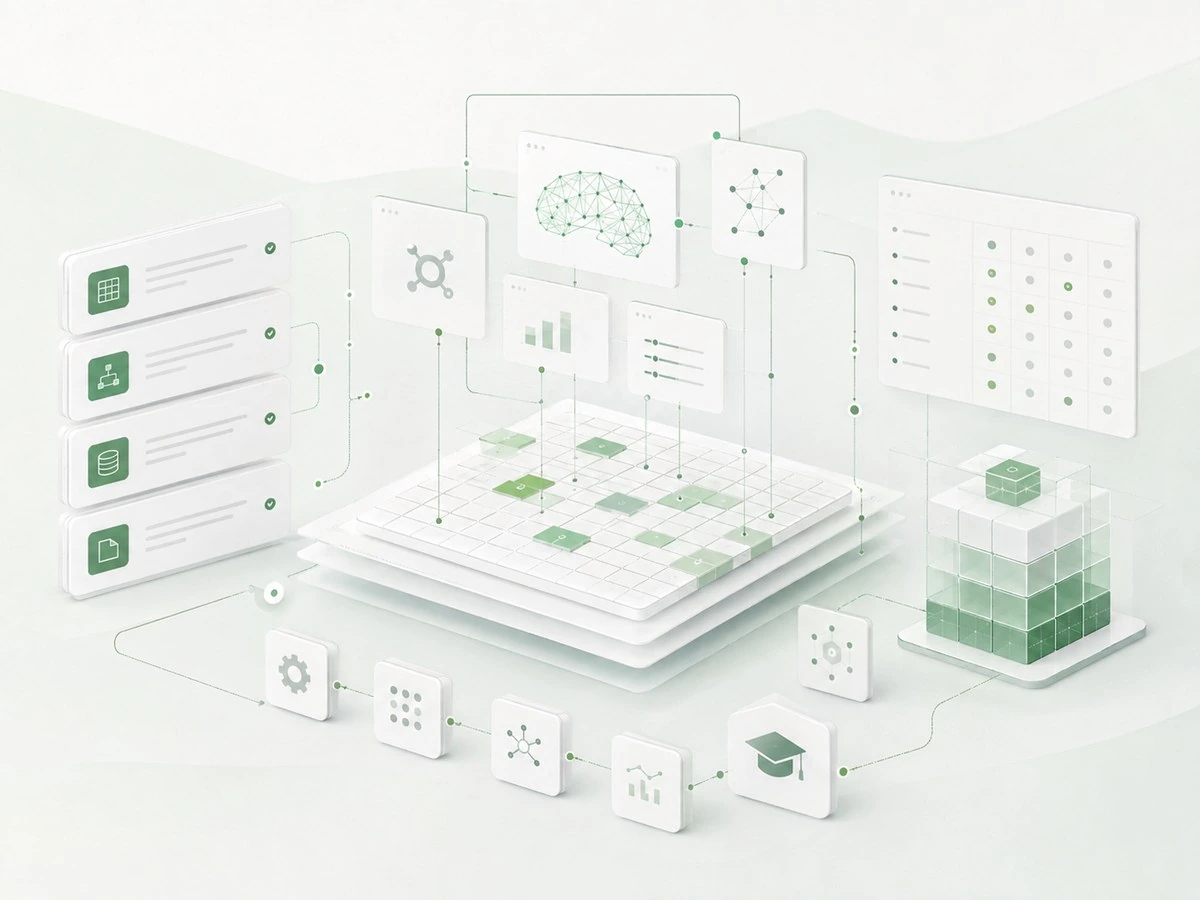
An information grid gives each part of the material a place. A simple grid may include stage, task, input, output format, and review point. This structure allows the learner to see what is ready and what still needs preparation.
Grids are useful because they make missing details visible. If the input column is empty, more material is needed. If the review point is unclear, the learner can define what should be checked before asking for a new version.
Explore the curriculum →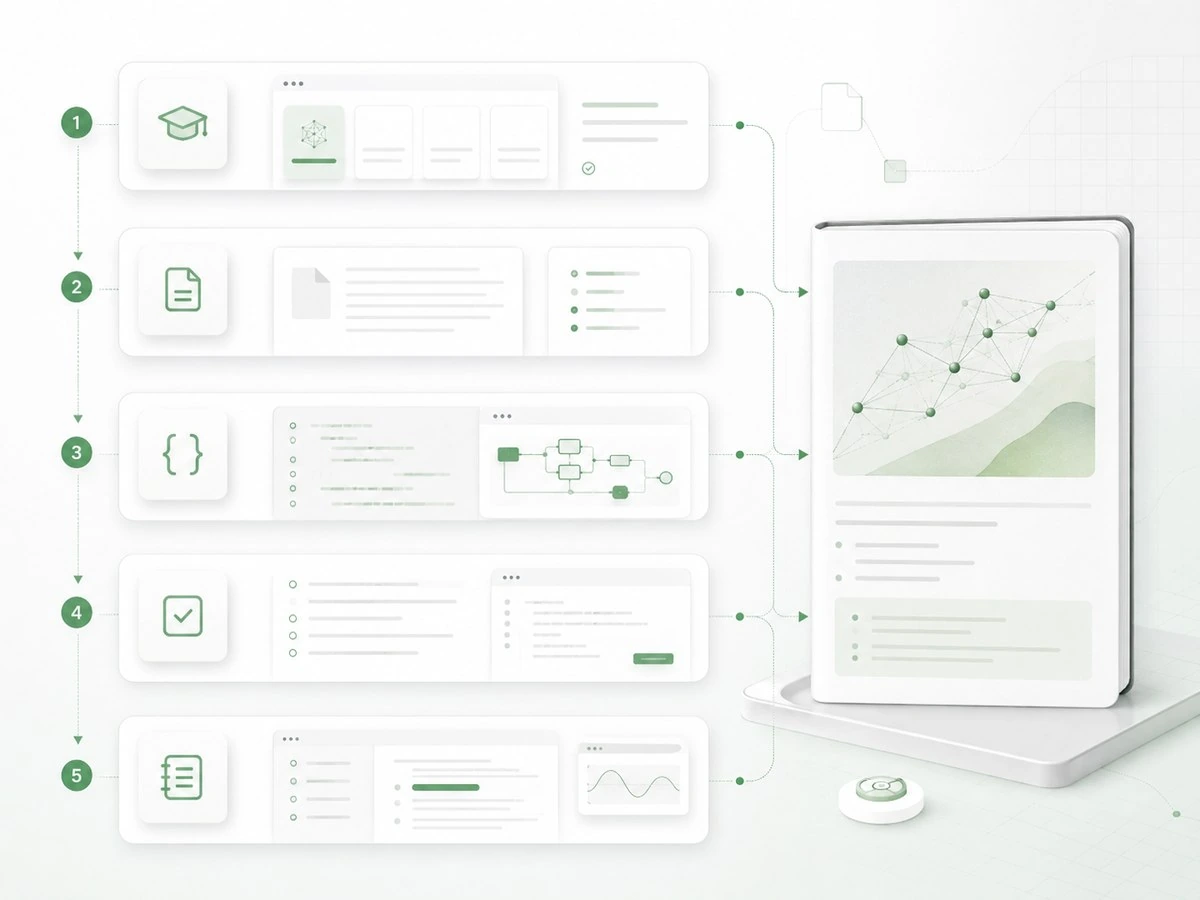
Study notes
How Process Maps Support Digital Workflows
A process map is a visual way to show how a digital task moves through stages. Instead of seeing automation as one instruction, the learner can see a route: starting task, preparation, instruction, first version, review, refinement, and final structure.
This view is useful for longer tasks because it shows where one stage ends and the next begins. It also helps reveal missing steps. If a map moves from draft to final version without review, the learner can add a review point before continuing.
Process maps can be simple. They may use cards, arrows, checkpoints, and short notes. The goal is not decoration, but clarity. Each stage should show what happens there and what material moves into the next stage.
Explore the curriculum →